
(This article is part three of four to celebrate the 80th anniversary of the closing of the Camp and the 10th anniversary of the opening of the POW Camp Concordia Museum.) Part 3 provides information about more than 4000 conscripted Germans housed at POW Camp Concordia from 1943-1945. Learn more about the WWII POW Camp Concordia at Victory Day on May 3 from 10-3. The free event features tours, WWII re-enactors' demonstrations and presentations.
Part III – Conscripted Germans at POW Camp Concordia
The following text about who was at POW Camp Concordia is from Prisoners of War in Kansas 1943-1946, written by Lowell May and Mark Schock. The book is available at Cloud County Tourism and POW Camp Concordia.
The arrival of the prisoners of war was supposed to be a secret, but somehow the townspeople would find out; sometimes it was even published in the newspaper. On 12 July 1943, a large crowd of Concordians watched the first 400 German prisoners of war disembark from the train. The enlisted prisoners were assigned to barracks that held fifty each. The officers were assigned to barracks that were divided into ten apartments, each holding four officers. All of the barracks were covered with tarpaper and were heated with two “cannon” stoves. The latrines and showers were in separate buildings from the barracks. The barracks of the American guards were identical. Guard towers were placed so the POWs were under constant observation.
While POWs could wear their German uniforms in camp, they were also issued blue uniforms that were marked with PW stenciled on the legs, back, seat and sleeves. These blue uniforms had to be worn when working outside the camp. The enlisted prisoners often wore the blue uniforms both in and out of the camp. However, the officers rarely wore the blue uniforms.
Within a week of their arrival, the German prisoners were out working on local farms. The regulations stated that one guard was to watch no more than four prisoners; but because of a shortage, a guard sometimes supervised well over four. The army provided transportation to and from the farms, for which the farmer was charged one-half cent per mile round trip. The farmers also paid the appropriate wage to the government for the labor.
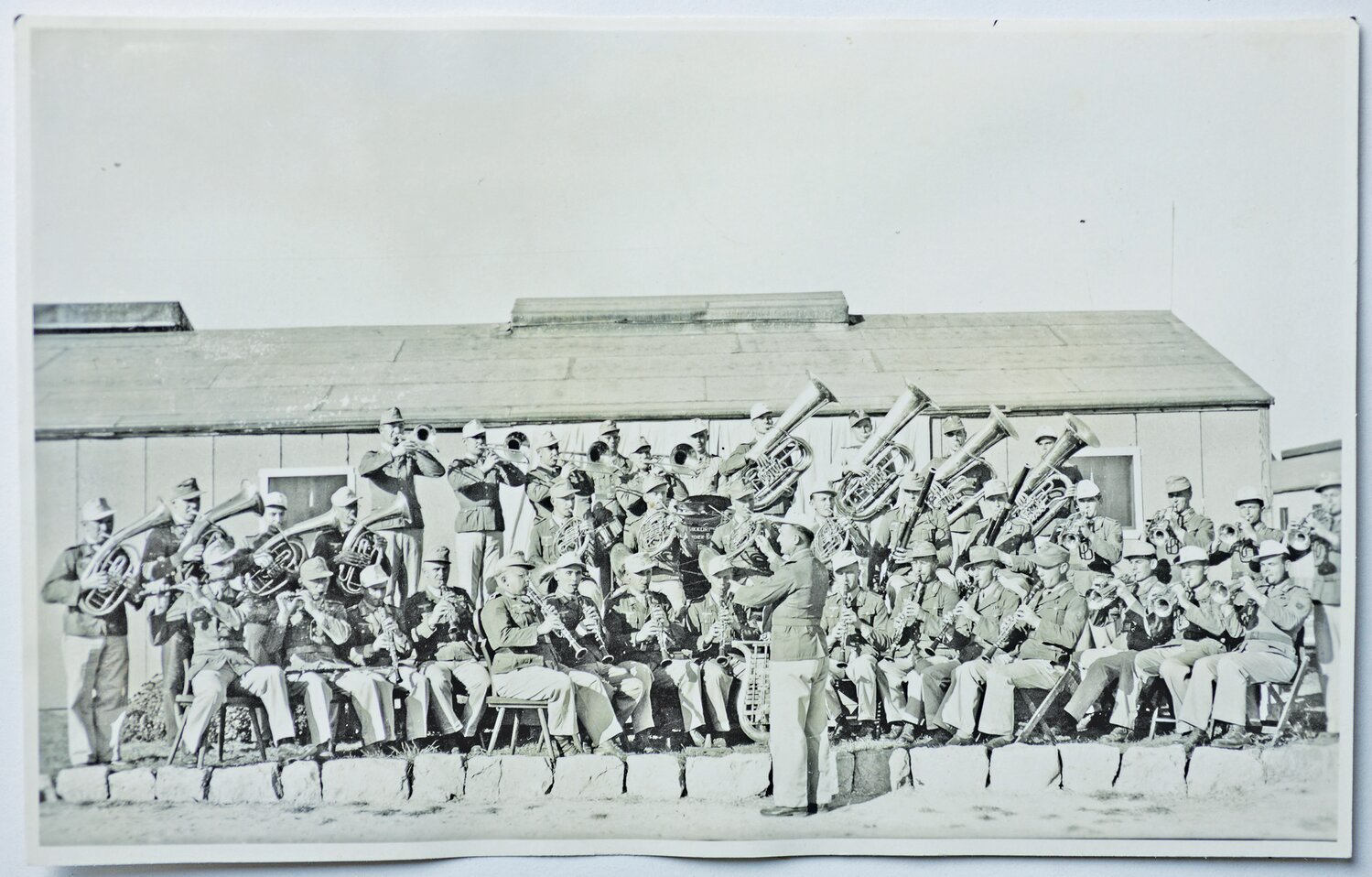
The enlisted prisoners who did not go out on details to the farms were put to work in the camp. They worked as cooks, janitors in the headquarters, translators, at the theater, in the warehouses and on various maintenance details within the camp. In accordance with the Geneva Convention, the German officers were not allowed to work, so they found other ways to spend their time. They turned some buildings into clubs or casinos. Others played sports or read. The library contained over 8000 works by 1945. Some were escorted on walks outside the camp or painted. They published a newspaper and started an orchestra and drama group. Later, the 47th Grenadier Band, which was captured in North Africa, was sent to Camp Concordia. The officers also started a school, POW University, that was recognized by the University of Kansas. At one time, 300 courses taught by the Germans were offered. The POW University could only be attended by officers.
Victory Day at POW Camp Concordia is Saturday, May 3 from 10-3. This year marks 80 years of the closing of the camp and ten years since the POW Camp Concordia Museum opened. Watch for more of the POW Camp story in the next issue of the Blade-Empire.


